

Opportunity Cost
Why I (still) drive an old carThe content on Surprising Wealth reflects my own experiences and opinions. It is not intended as financial, legal, or tax advice. Please consult a professional for advice tailored to your situation.
The Best Car I Never Bought
Seven years ago, I was ready to buy a different car.
I’d done everything “right.” I had saved the money, planned to pay cash, and could comfortably afford the upgrade. There wasn’t any debt involved or financial stress. It seemed like the logical next step. There wasn’t any pressure to buy immediately, but I knew my car was getting older and that an upgrade would eventually be on the horizon.
Then something unexpected happened.
A promising potential rental property came on the market.
As I looked at the numbers, I realized we had a choice to make. I could exchange my savings for 1) a newer car that would slowly lose value over time. Or 2) I could use that same money as the down payment on an investment that had the potential to grow.
Neither option was wrong.
But they would take us in very different directions.
The funny thing was, I didn’t mind my current car. It was mostly very reliable. It got me where I needed to go. It had fading paint and no backup camera. It didn’t have all the latest features, but it wasn’t preventing me from living the life I wanted.
Once I realized that, the opportunity cost became impossible to ignore.
Every dollar spent on a newer vehicle was a dollar that couldn’t go toward building more freedom in the future. So we made what felt like the more exciting decision. Instead of buying another car, we used the money towards the down payment on the rental property. At the time, it didn’t feel like some brilliant financial move. It simply felt like choosing the option that gave our money the greatest chance to work for us.
Then life happened. The rental produced income. We maintained it, solved problems, celebrated having a good tenant, and watched the investment slowly mature. It wasn’t always exciting, but year after year it quietly worked in the background.
Recently, we decided it was time to sell.
Our long term tenant was moving out. The house was in great shape with very little work needed to get it ready to sell. We had higher than expected appreciation in recent years. It felt like time to harvest our investment. After accounting for all of our expenses over those 7 years, the profit from that investment ended up being more than four times our original down payment.
Over a 400% return.
That profit alone is enough to cover about 1.3 years of our current household spending.
When I first ran the numbers, I had to look at them twice. Not because I expected real estate to always perform that way. It won’t. But because I was reminded how powerful opportunity cost can be. I didn’t give up a newer car, I simply postponed it.
And here’s my favorite part of the story. I still have the original amount of money I’d saved for the car. It never disappeared. It simply changed jobs. Instead of becoming a depreciating asset, it became an investment that generated returns. Instead of sitting in my driveway losing value, those dollars spent seven years working for us first. Seven years ago I had funds to upgrade my car. By waiting to upgrade so we could take advantage of a better opportunity, we now have that same amount of money to upgrade my car… and we have 1.3 years of living expenses we don’t have to earn at out “jobs”.
Today, I could still use that money to buy a newer vehicle if I wanted to. In fact, I’d love to own an electric or hybrid vehicle someday. Maybe even someday soon. I just don’t want to… yet.
Not because I think everyone should drive an old car. Not because newer vehicles are “bad.” But because every dollar has an opportunity cost. Whenever we spend money, we’re also choosing everything that money can no longer become. For us, one newer car meant giving up an investment opportunity. Looking back, I have absolutely no regrets. In fact, I’d make the same decision again.
This story isn’t really about real estate.
If we weren’t investing in rental properties at the time, we might have invested the money in low-cost index funds instead. The principle would have been exactly the same.
The lesson isn’t “buy rentals.”
The lesson is to pause before making a major purchase and ask a different question. Instead of asking, “Can we afford this?” start by asking, “What are we giving up if we say yes?” Whenever we spend money, we’re also choosing everything that money can no longer become.
Buy What Matters Most To YOU
I’m a homebody. My work is location-independent, and I usually drive fewer than 6,000 miles a year. Most days, my car sits quietly in the driveway waiting for the occasional grocery run, bookclub meetup, or weekend adventure. For our lifestyle, replacing it simply hasn’t risen to the top of the priority list.
What excites me much more is buying free time.
Every dollar we invest in productive assets is another small step toward needing to work less for money. Those investments gradually buy mornings without alarms, weekday hikes, longer visits with family, afternoons at the beach, and the freedom to say “yes” to opportunities that don’t fit neatly into a two-week vacation schedule.
That’s the real comparison.
It was never car versus rental property.
It was car versus more freedom.
If we hadn’t invested in real estate, we probably would have invested the money somewhere else, like low-cost index funds. The lesson isn’t that rental properties are the best investment.
The lesson is to pause before making a major purchase and ask one simple question:
What else could this money become?
Sometimes the answer is, “Nothing. Buy the thing.”
Life is meant to be enjoyed, and not every purchase needs to maximize your net worth. But every once in a while, another opportunity comes along that’s simply too good to ignore. Seven years ago, that opportunity was the chance to put our money to work first, buying us an extra year+ of freedom from work, at the expense of driving my perfectly acceptable (to me) vehicle a little while longer.
Today, I still have enough money to buy that newer car. Whenever I want to. Plus 1.3 years extra cash. That’s 319 fewer days either of us have to work because of the tradeoff decision we made. That’s a trade I’ll gladly make every time.
What else could this money become? (Its worth repeating)
That question has quietly shaped many of the financial decisions we’ve made over the years. It’s one of the reasons we reached CoastFI. One of the reasons we’re approaching financial independence. One of the reasons we’ve been able to buy more flexibility, more freedom, and more time together.
Ironically, the best car I ever bought…
…was the one I never did.
Because what I REALLY wanted wasn’t a newer vehicle. I wanted a life with more choices. And seven years later, I’m still driving toward that destination.
*Caveats: Being a landlord is not passive. This is a simplified but real example of a choice we made. There were still efforts we had to make over the 7 years we owned the house: Getting the house ready to rent, doing repairs as needed, communicating with the tenant, handling rent payments and bookkeeping. If you bundled them all together, maybe the argument could be made we saved ourselves 300 fewer days of work (not 319) because we added 19 days worth of effort over 7 years. Still an amazing return on a small amout of money plus a small amount of effort, and well worth doing.
– – – –
#FinancialIndependence
#FIREJourney
#EarlyRetirementPlanning
#IntentionalSpending
#RealEstateInvestor
#SurprisingWealth
– – – –
A Bit About Us
Our journey began with humble beginnings. We’ve navigated through the challenges of creating a life and a living we love, while earing low to median incomes. What started as a modest dream of being able to retire someday has turned into a concrete plan. We’ve been on the SlowFI path, consistently saving and investing for 20+ years. Our income over time has stayed roughly in the 50th percentile, so we are truely everyday Americans. We’ve achieved remarkable results through living below our means and consistently investing the difference. Now in our mid-40s, we are in the top 20% for U.S. household wealth for our age group. This has been possible through conscious spending, consistent saving, strategic investing, and a commitment to lifestyle design where we spend generously on things that bring us value and contentment, while cuting back on things we are ambivalent about. It can be daunting when you hear the stories of tech workers or doctors or other people with large income shovels. We want to share how an everyday couple with median US income has built wealth for the future, while also creating a life we love today.
Why Financial Independence?
Financial Independence means having the freedom to make choices that aren’t dictated only by the need for a paycheck. It’s about gaining control over your time and energy, and being able to pursue what truly matters to you. For us, it’s about creating time for friend & family, travel, and the experiences that bring joy and fulfillment.
Join Us on the Journey
In January 2021, I ran some calculations, projected our investment growth, and analyzed our current spending levels. After adjusting our spending assumptions for future inflation, I realized we were on track to replace our earned income (trading time for money) with investment income (our money making money for us) in approximately 10 years. With 75 months left to go, we’re solidly on that path and we want you to join us. Whether you’re just starting out or well on your way to financial independence, Surprising Wealth is here to support and inspire you. Together, we can make every month count and turn dreams into reality.
Thank you for being a part of our community. Let’s embark on this journey to financial independence together!
Disclaimer: All the tips and stories here are from my own journey toward financial independence. Remember, what worked for me might not work for everyone. This content is for informational purposes only and should not be considered as financial, legal, or tax advice. Always consult with a professional before making any significant financial decisions.
%
CoastFI for Retirement
%
To LeanFI
%
To FIRE Number
Months To FI
Recent Blog Posts
Discover the power of small actions and big dreams with Surprising Wealth. Through a blend of personal anecdotes, case studies, and actionable tips, we’ll show you how we’re navigating the complexities of money management, investment strategies, and lifestyle choices to achieve true financial freedom and fulfillment.
The Anti-Upgrade Mentality That Upgraded Our Entire Life
Every major purchase asks the same question: What else could this money become? Years ago, we started asking that question before upgrading our home or car. The answers reshaped our finances… and our lifestyle.
65 Months to FI – Practicing Looking for the Opportunity
65 months to FI! Just months after deciding to slowly wind down our rental portfolio, life accelerated the plan for us. Three long-term tenants moved out in rapid succession, giving us the unexpected opportunity to sell three properties this year instead of one. Twenty years ago, we couldn’t have imagined how much rental real estate would shape our Financial Independence journey. Today, we’re learning to embrace the evolution of that chapter.
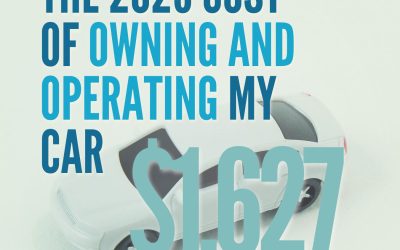
2025 Auto Cost: The Quiet Superpower of a Boring Car
Every year I calculate the true cost of owning my vehicle, including insurance, maintenance, taxes, and depreciation. The results remind me that one of the best ways to build wealth isn’t earning more… it’s spending intentionally on the things that matter most.