

Money For Couples
Money Conversations That Strengthen Your RelationshipThe content on Surprising Wealth reflects my own experiences and opinions. It is not intended as financial, legal, or tax advice. Please consult a professional for advice tailored to your situation.
Combining finances with someone you love is one of the biggest financial decisions you’ll ever make…
but it’s also one of the least talked about.
Many couples assume they’ll simply “figure it out” as they go. After all, if you love each other, money will work itself out, right? Unfortunately, that’s not how it plays out for most people. Financial disagreements are one of the top causes of stress in relationships, and without a shared framework, money can quietly become a source of tension, resentment, or even a dealbreaker.
But let’s take a step back. Merging finances with a partner isn’t just about avoiding problems. It’s an act of optimism. Choosing to build a life together means believing in a shared future. And while love might be the foundation of a strong relationship, financial transparency, fairness, and intentionality are the structures that hold it up.
So, how do you create a system that protects both partners, no matter who earns more? How do you ensure long-term financial security while also allowing for personal freedom? And most importantly, how do you build a financial partnership that feels empowering rather than restrictive?
In this post, I’ll share the key conversations my partner and I had about money, the framework we use to keep things fair and flexible, and the lessons we’ve learned along the way. We are just one data point in a sea of strategies. The important thing is to find a system that works for your own set of circumstances and your unique blend of financial psychologies. Whether you’re merging finances fully, keeping things separate, or choosing something in between, my hope is that this will give you a starting point to build a system that works for you.

Managing Our Finances
We view our finances as a whole, but we manage them with a combination of joint and personal accounts.
VISIBLE: All of our financial accounts (credit cards, mortgage, savings, investments, retirement, etc.) are aggregated using tools like Monarch, Empower, Copilot, or YNAB. This ensures all of our finances and transactions are fully visible to both of us. Periodic sharing of credit reports is also a loving way to show your partner that you are disclosing your credit accounts and debts. Even though my partner isn’t interested in financial minutiae and trusts that I’m tracking and planning for us, I want everything to always be disclosed and the financial data accessible. The responsibility of planning our finances and future should be a shared endeavor.
EQUITABLE: Since I am both more frugal and earn noticeably less than my partner, we work to balance the power dynamics in our financial decision-making to keep it feeling fair. It’s not always easy, but we focus on creating financial security, meeting our saving and investing goals, and still allowing for personal discretionary spending. We are building our future together, with room for individual financial choices. Here’s our approach:
JOINT: We have a joint account for all expected household expenses, from mortgage to groceries, insurance to emergency funds. We also have joint savings goals for the future, including short-term sinking funds for things like travel, vehicles, and home repairs, as well as long-term investment planning. Spending from this account is a joint decision and subject to budget review. We review our spending and goals together at least a few times a year. While the proportion we each contribute has changed over the years, the majority of our earned income goes into this joint account or is directed to retirement and investment accounts.
PERSONAL: We also maintain personal accounts. Each month, a set amount of money from the joint account is sent to our personal accounts. This is money we’ve allocated for spending according to our individual personal values. This arrangement allows us to spend without stress or concern about the other’s spending, as long as it stays within the budgeted personal amount. This doesn’t have to be equal, but it’s important to avoid economic disparity between partners.
SHARED DREAMS of FI: One of our key shared dreams is building wealth and financial stability by converting our earned income to passive income via investments. I’ve wanted to follow the F.I.R.E. path quickly, while my partner wants to keep working, enjoy more discretionary spending now, while knowing we are funding eventual retirement. After much discussion, we compromised on a SlowFI path, which allows us to gradually achieve financial independence while enjoying our journey along the way. This path balances our desire for financial security and early retirement with our desire to enjoy life now and not be too singularly focused on the future. In our relationship, this has resulted in an unconventional solution. These days, my partner has a much larger personal spending budget, while I “spend” much of my personal budget by working fewer hours and having more time freedom. We regularly review our progress and adjust our plans as needed, ensuring that our shared dream remains aligned with our individual aspirations.
LEGAL/CONTINGENCY PLANNING: It’s important to understand how marriage changes your legal responsibilities. Unless you have a prenuptial or postnuptial agreement, your marriage is governed by state laws. Generally, this means joint responsibility and ownership of debts, real property, retirement, and savings acquired during the marriage. Even if you manage finances separately, the law often considers them joint. It’s essential to maintain full visibility into each partner’s finances because their finances are your finances as well. Surveys suggest that 25-44% of relationships experience some form of financial infidelity, which can include hiding accounts, debts, purchases, or income.*
ESTATE & EMERGENCY PLANNING: In case of incapacity or death, it’s vital to know how your partner’s finances work. Basic estate planning, such as wills and power of attorney, is critically important. Ensure you have access to passwords and the necessary authorizations to manage their financial accounts. We use a password manager and update a document annually with basic information on all our accounts, both joint and separate, to avoid scrambling in a stressful situation.
Money For Couples Tip: Build Wealth As A Team
– – – –
Let’s get curious….
Have you talked about how your financial upbringings shape your money habits?
Picture yourself at the dinner table as a child. What messages about money did you hear growing up? Was it a source of stress or abundance? Now, think about your partner’s experience. How might their financial background influence their decisions today? How can you both bring awareness to these differences without letting them create friction?
What financial rules or guardrails could help protect your relationship?
Imagine you’ve just had your first major financial disagreement as a couple. Maybe it’s about a big purchase, a risky investment, or an unexpected expense. What rules or systems could you have in place to prevent money from becoming a source of resentment? How can you build financial guardrails that create trust instead of restrictions?
Empowering Your Partner with Financial Safety and Independence
As the higher earner in your relationship, how do you create a sense of financial security for your partner who earns less, stays home, or has less financial independence? If they’re relying on you for income, it’s easy to unintentionally create an imbalance where they feel more vulnerable if anything goes wrong. Imagine your partner’s financial world is fully tied to your earnings—what happens if something happens to you, or if the dynamic changes? Do they have their own savings, access to emergency funds, or retirement planning in place? How can you empower them with the tools and resources they need to feel just as secure and independent as you?
What’s the best investment you’ve made in your relationship—financial or otherwise?
Think back to a time when you and your partner made a decision that strengthened your relationship. Maybe it was a financial choice, like buying a home together, or an experience, like a meaningful trip. How can you continue making financial decisions that don’t just grow your wealth but also enrich your life and partnership?
#SurprisingWealth #FinancialFreedom #FIREMovement #WealthMindset #MoneyForCouples #CombiningFinances #SlowFI #MindfulMoney #FinancialIndependence #LifestyleDesign
* Stat Sources: link, link, link, link
– – – –
A Bit About Us
Our journey began with humble beginnings. We’ve navigated through the challenges of creating a life and a living we love, while earing low to median incomes. What started as a modest dream of being able to retire someday has turned into a concrete plan. We’ve been on the SlowFI path, consistently saving and investing for 20+ years. Our income over time has stayed roughly in the 50th percentile, so we are truely everyday Americans. We’ve achieved remarkable results through living below our means and consistently investing the difference. Now in our mid-40s, we are in the top 20% for U.S. household wealth for our age group. This has been possible through conscious spending, consistent saving, strategic investing, and a commitment to lifestyle design where we spend generously on things that bring us value and contentment, while cuting back on things we are ambivalent about. It can be daunting when you hear the stories of tech workers or doctors or other people with large income shovels. We want to share how an everyday couple with median US income has built wealth for the future, while also creating a life we love today.
Why Financial Independence?
Financial Independence means having the freedom to make choices that aren’t dictated only by the need for a paycheck. It’s about gaining control over your time and energy, and being able to pursue what truly matters to you. For us, it’s about creating time for friend & family, travel, and the experiences that bring joy and fulfillment.
Join Us on the Journey
In January 2021, I ran some calculations, projected our investment growth, and analyzed our current spending levels. After adjusting our spending assumptions for future inflation, I realized we could replace our earned income (trading time for money) with investment income (our money making money for us) in approximately 10 years. With 90 months left to go, we’re solidly on that path and we want you to join us. Whether you’re just starting out or well on your way to financial independence, Surprising Wealth is here to support and inspire you. Together, we can make every month count and turn dreams into reality.
Thank you for being a part of our community. Let’s embark on this journey to financial independence together!
Disclaimer: All the tips and stories here are from my own journey toward financial independence. Remember, what worked for me might not work for everyone. This content is for informational purposes only and should not be considered as financial, legal, or tax advice. Always consult with a professional before making any significant financial decisions.
%
CoastFI for Retirement
%
To LeanFI
%
To FIRE Number
Months To FI
Recent Blog Posts
Discover the power of small actions and big dreams with Surprising Wealth. Through a blend of personal anecdotes, case studies, and actionable tips, we’ll show you how we’re navigating the complexities of money management, investment strategies, and lifestyle choices to achieve true financial freedom and fulfillment.

The Best Car I Never Bought
I thought I was saving for my next car. It turns out I was really saving for something much bigger. Here’s how an unexpected opportunity transformed a future car purchase into the down payment on a rental property… and one of the best lessons we’ve learned about opportunity cost.

The Anti-Upgrade Mentality That Upgraded Our Entire Life
Every major purchase asks the same question: What else could this money become? Years ago, we started asking that question before upgrading our home or car. The answers reshaped our finances… and our lifestyle.
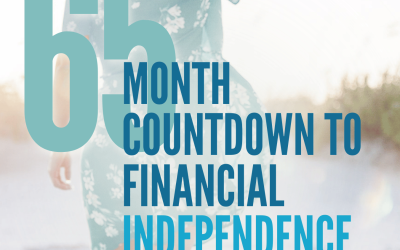
65 Months to FI – Practicing Looking for the Opportunity
65 months to FI! Just months after deciding to slowly wind down our rental portfolio, life accelerated the plan for us. Three long-term tenants moved out in rapid succession, giving us the unexpected opportunity to sell three properties this year instead of one. Twenty years ago, we couldn’t have imagined how much rental real estate would shape our Financial Independence journey. Today, we’re learning to embrace the evolution of that chapter.

2025 Auto Cost: The Quiet Superpower of a Boring Car
Every year I calculate the true cost of owning my vehicle, including insurance, maintenance, taxes, and depreciation. The results remind me that one of the best ways to build wealth isn’t earning more… it’s spending intentionally on the things that matter most.

2026 Great Life Goals: Mid-Year Friendship Goal Check-In
One of the ideas behind SlowFI is that you don’t postpone living until you reach your financial number. This year’s visits with friends goal has been a wonderful reminder of that. Research consistently shows that strong relationships are one of the biggest predictors of health and happiness. So we simply keep saying yes to inviting friends over, attending bookclubs, and chatting with neighbors. Those tiny choices added up to 79 meaningful connections so far.
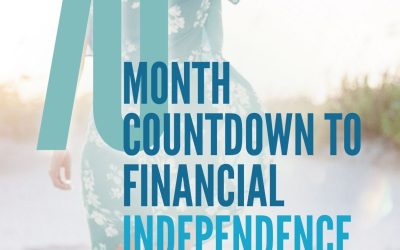
70 Months to FI – What Would You Want Less of in 6 Years?
70 months to FI! When you’re far from Financial Independence, you optimize for growth. When you’re closer, you begin optimizing for simplicity. This month’s decision to sell a long-held rental property marks a quiet but meaningful shift in how we’re preparing for the next chapter. As we approach FI, we’re realizing that what once energized us is now beginning to exhausts us. Sometimes the bravest financial decision is letting go of something that once made perfect sense.
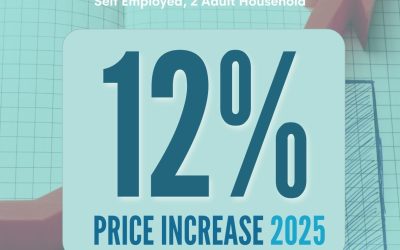
Self-Employed Health Insurance: 12% premium increase for 2025
Our 2025 health insurance premium increased by 12%. Healthcare is now our second-largest expense as a self-employed couple. And unlike groceries or travel, this isn’t an area where we can optimize much further. High deductible. No subsidies. Shopping the marketplace every year. As we plan for early retirement, we’re treating healthcare differently than other spending categories.
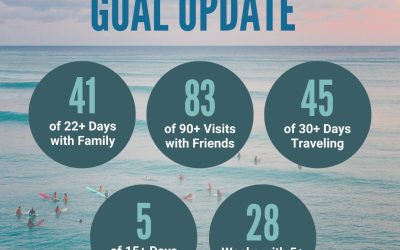
2025 Great Life Goals: Year End Review
In 2025, my Great Life Goals told a story I didn’t fully expect. More time with aging parents. Fewer ocean days than I craved. Travel shaped more by service than adventure. This year, I tracked days with family, visits with friends, travel, ocean time, and walking habits. But what I really measured was alignment. 2025 became a year of proximity to the people who matter most, releasing pressure in hard seasons, and noticing where my spending isn’t yet representing my values. Here’s what my goals revealed about the life I’m building.
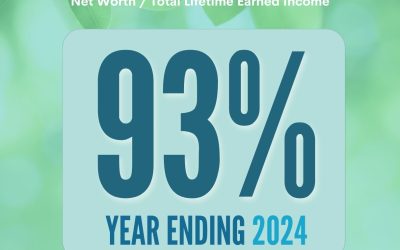
Tracking Our Lifetime Wealth Ratio: 2025 Update
For every $1.00 we’ve earned as income in our lifetime, we’ve built $0.93 of net worth, not by saving every dollar, but by investing regularly and letting time + compounding do the work to grow our wealth. Ever wondered how effectively you’re turning income into wealth? We’ve been tracking our progress for the last 5 years using the Lifetime Wealth Ratio.