

How to Retire Early: Unlock FI Freedom Before Age 65+
Ditch the Day Job: A Simple Guide to Retiring Early with the 4% RuleThe content on Surprising Wealth reflects my own experiences and opinions. It is not intended as financial, legal, or tax advice. Please consult a professional for advice tailored to your situation.
Can You Really Retire Early?
Yes!* Here’s How to Quit Your Job Decades Sooner.
*tldr: Spend less than you earn, save and invest the rest, retire when your invested net worth is 25 times your annual expenses

How to Retire Without Waiting Until Your 60s
Do you ever catch yourself daydreaming during yet another work meeting, thinking, “There’s got to be more to life than this”? Maybe you’ve even Googled things like, “How can I retire early?” or “How can I quit my job without going broke?” You’re not alone. Many people feel stuck in a job they dislike, working toward the distant dream of retirement in their 60s. But what if you didn’t have to wait that long?

I grew up thinking early retirement was something reserved for people with huge salaries, trust funds, or just incredible luck. I assumed I’d be stuck in a job until traditional retirement age, just like everyone else. But everything changed when I stumbled across the concepts of financial independence and investing. At the time, the idea of retiring early was still pretty obscure, and most people hadn’t heard of it.
These days, though, the idea has caught FIRE (pun totally intended!). Now, there’s a thriving community of people following the FIRE (Financial Independence, Retire Early) movement. They aren’t just talking about early retirement—they’re doing it. And not just on six-figure incomes. Some are retiring in their 30s, 40s or 50s on regular, everyday incomes!
So, how does it work? Here’s the general roadmap:
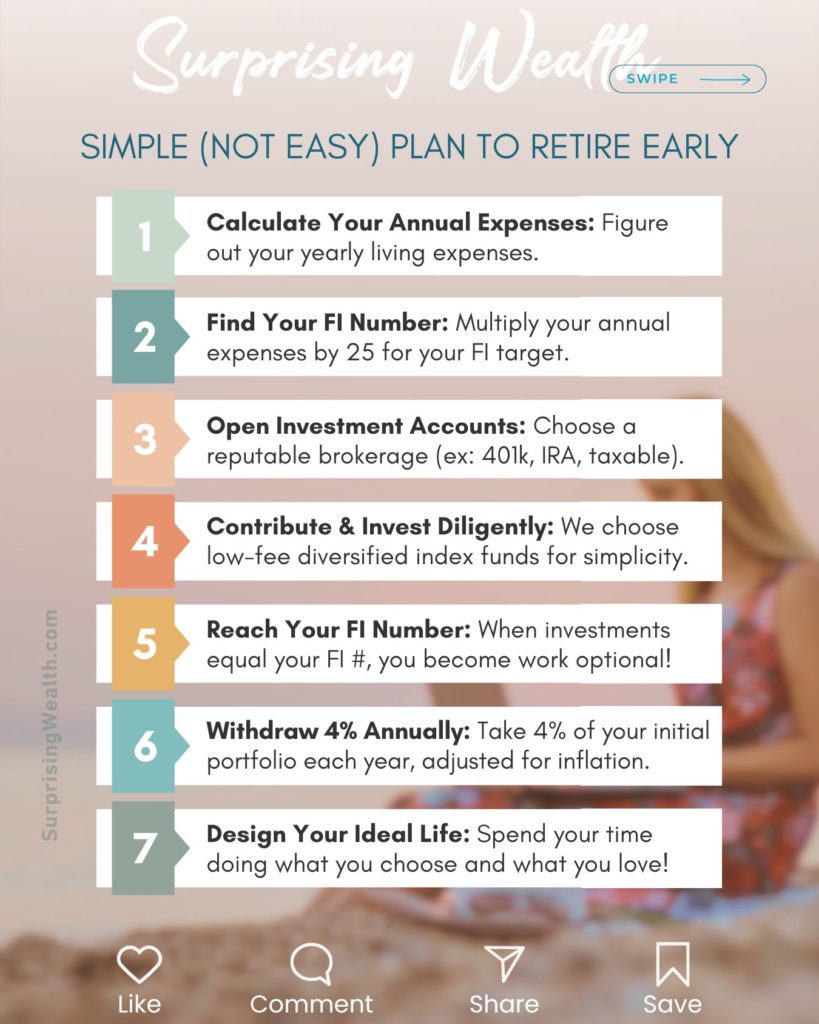
Nutshell: How to Retire Early Without Waiting Until You are 65 (or 67+)
- Calculate Your Expected Annual Expenses: Determine how much money you need each year to cover your living expenses.
- Find Your Financial Independence Number: Multiply your annual expenses by 25. This is the amount you need invested to reach financial independence.
- Open and Fund Your Investment Accounts: Choose a reputable brokerage to hold your investments. You can utilize a mix of brokerage account types to maximize your tax advantages and diversify your investment strategy. Examples of brokerage account types: 401k, Roth 401k, Solo 401k (if self employed), 403b or 457 (if government or non-profit employed), IRA, Roth IRA, or just a regular “taxable” brokerage account.
- Contribute & Invest Aggressively: Maximize your contributions to your brokerage accounts. We choose diversified index funds with low fees.
- Reach Your FI Number: When your investments equal your FI number from step 2, you become work optional.
- Withdraw 4% Annually: Plan to withdraw 4% of your investment portfolio, adjusted for inflation each year.
- Design Your Ideal Life: Decide how to spend 100% of your time doing what you love.
This strategy is known as the 4% Rule (of Thumb), developed by financial advisor Bill Bengen and validated by the Trinity Study (and many many other since then). While there are details and nuances to consider, the core idea is simple: invest enough so that your investments generate more than your inflation-adjusted expenses each year. This allows you to be free from needing a job.
Now that we have the general strategy, lets take a closer look:
How to Quit Your Job and Retire Early: Retirement is not an age, but a number…
Step 1: Calculate Your Annual Expenses
Before you can figure out how much money you’ll need to retire, you need to know what you’re spending now. The idea is to replace your annual living expenses with income from your investments. Take a look at your current budget (or track your expenses if you don’t have one yet) and see how much money you actually need to live on each year. Alternately, decide how much you will need to spend each year for your intended retirement lifestyle.
Step 2: Multiply Your Annual Expenses by 25
This is the 4% Rule of thumb, which suggests that you need to save up 25 times your annual expenses, and invest it in assets that grow in value (typically stock mututal funds, bonds, and/or investment real estate) to become financially independent. This number is your Financial Independence (FI) Number. For example, if you spend $40,000 per year, you’d need $1,000,000 invested to retire early.
The 4% Rule was developed by financial advisor Bill Bengen and validated by the Trinity Study, showing that if you withdraw 4% of your initial retirement nest egg each year, adjusted up for inflation every year, there’s a very high likelihood that your money will last for at least 30 years, even accounting for inflation. (*Their research was based of a 50/50 portfolio of S&P500 and bonds, so your own investment mix and safe withdrawl rate may vary)
Step 3: Open and Fund Your Investment Accounts
Now that you know your FI number, it’s time to start building your investment portfolio. Choose a reputable brokerage company to manage your investments and take advantage of different types of accounts:
- 401(k): If your employer offers a 401(k), contribute as much as possible, especially if they match contributions. Your savings grow tax-deferred, meaning you won’t pay taxes on them until you start withdrawing in retirement.
- Roth 401(k): Many employers also offer Roth 401(k)s, where your contributions are made with after-tax dollars, but withdrawals (including investment gains) are tax-free in retirement. This can offer significant tax flexibility in the future.
- Solo 401(k): If you’re self-employed or a small business owner, a Solo 401(k) allows you to contribute as both the employee and the employer, offering higher contribution limits than a standard 401(k).
- IRAs: Traditional and Roth IRAs are also fantastic tools for saving for retirement. You can contribute up to $6,500 annually ($7,500 if you’re over 50) and benefit from tax-deferred (Traditional IRA) or tax-free growth (Roth IRA).
- Taxable Brokerage Account: For more flexibility, contribute to a taxable brokerage account. While it doesn’t offer the same tax benefits as retirement accounts, you can access your money at any time without penalties. This is crucial for anyone looking to retire before the traditional retirement age of 59 ½.
- *Not a recomendation: Some common brokerage companies include Fidelity, Vanguard, Schwab.
By using a combination of these accounts, you can create a diversified portfolio that grows over time, giving you options when you’re ready to tap into your investments.
Step 4: Invest in Low-Cost, Diversified Index Funds
Now that you’ve opened your accounts, it’s time to invest. Many people in the FIRE community swear by low-cost, diversified index funds. These funds allow you to own small pieces of many different companies, spreading out your risk and minimizing fees. The goal is to invest steadily and let the power of compound growth work for you over time.
Step 5: Reach Your FI Number and Become “Work Optional”
Once the amount in your investment accounts equals your FI number, you’ve officially reached financial independence! At this point, you can live off 4% of your investments each year, which should cover your annual expenses indefinitely. While you can certainly quit your job if you want, the real power of financial independence is having the freedom of choice. You can decide to work part-time, take a lower-paying job you’re passionate about, start your own business, or simply enjoy life on your own terms.
Step 6: Withdraw 4% Each Year
The beauty of the 4% Rule is its simplicity. In the first year of retirement, you withdraw 4% of your total investments. Each year after that, you adjust the amount for inflation, ensuring that your withdrawals maintain the same purchasing power over time. If your portfolio grows faster than your withdrawals (which historically, with a diversified portfolio, it should), your money will last for decades—possibly even forever.
Step 7: Decide What You Want to Do with 100% of Your Time and Your Life
Financial independence isn’t just about quitting your job. It’s about gaining control of your time. When you no longer have to work for money, you get to ask yourself, “What do I really want to do?” Whether that’s traveling the world, pursuing hobbies, spending time with family, or volunteering, the choice is yours.
– – – –
Are You Willing to Be Different to Retire Early?
If you want to retire early, you’ve got to be willing to be a little weird. It’s not the path most people take—especially if you’re a median income earner. While your co-workers, friends, and even family might be splurging on new cars, fancy vacations, or upgrading their homes, you’ll have to make different choices. It may feel like a sacrifice at times, but these tradeoffs are how you achieve something far more important: freedom.
Why Following the Crowd Won’t Help You Retire Early
Early retirement isn’t just for people with massive salaries or lucky breaks. It’s for those willing to make intentional decisions, spend less than they earn, and invest the difference. This means turning away from what the mainstream media and society often push: living for the short term. Instead, you follow a path that might feel unconventional, but it leads to something life-changing—the ability to quit your job and design a life you love. With the principles of FIRE (Financial Independence, Retire Early) and the 4% Rule, even someone earning an average salary can reach financial independence and retire decades ahead of schedule.
You don’t have to wait until you are 65+. You just have to be willing to prioritize your long-term freedom over short-term desires, and that’s what makes the journey both challenging and rewarding.
– – – –
How Much Do I Need to Save?
The answer to “How much do I need to save?” really depends on how soon you want to retire. The more you save, the faster you can achieve financial independence.
For example, let’s talk about savings rates, how much of your income you set aside for the future. If you’re saving only 10% of your income, you might be on track for a typical retirement in your 60s. But what if you could save 50% or even more? You could retire in as little as 15-20 years, regardless of your current age.
Here’s the basic idea: the higher your savings rate, the less you need to live on, and the more you’re putting away for the future. Let’s say you’re saving 50% of your income. That means you’re living on the other 50%, and in just one year, you’ve saved enough to cover another year of living expenses. Do that for 15 or 20 years, and you’ll have enough to live on indefinitely*, thanks to the magic of compound interest and investing.
Take a look at this rough breakdown:
- Saving 10% of your income = Retire in about 50 years.
- Saving 25% = Retire in about 32 years.
- Saving 50% = Retire in about 17 years.
- Saving 75% = Retire in about 7 years.
The math is surprisingly simple**: The more you save and invest now, the less time you’ll spend working in the future. Want to retire in your 40s? Aim for a savings rate of 50% or more starting in your 20s. Want to retire even earlier? Push that number higher. How quickly you reach financial independence is entirely up to how much you’re willing to save and invest.
*Indefinitely is often defined as 30+ years. Historical research in the 4% rule (of thumb) has shown there is about a 60-70% chance that a retiree will have the same or more in their portfolio after 30 years, particularly with portfolios that have a higher equity allocation (like 50-75% in stocks). See this Kitces article for a deeper dive into safe withdrawl rate research from an industry expert.
**Many people credit Mr. Money Mustache’s article, The Shockingly Simple Math Behind Early Retirement, with convincing them of the power and potential of early retirement. You can find it here.
How much do I need to save if I want to take a slower path? One that balances my lifestyle today, while saving for the future?
The answer to “How much do I need to save?” really depends on how soon you want to retire and how much flexibility you want to create along the way. It’s not about extreme sacrifices (unless you want it to be); it’s about finding a balance that works for you.
Let’s talk about more modest savings rates… the percentage of your income that you set aside for the future. If you’re saving 10-15%of your income, you’re likely on track for a traditional retirement in your 60s. But if you increase that savings rate, you can gradually reduce the number of years you’ll need to work and create more freedom along the way.
For example:
- Saving 20-25% of your income could allow you to retire in 30-35 years, giving you more flexibility to enjoy life while you’re still working.
- Saving 30-40% could shorten your working years to 20-25 years, putting you on track for retirement in your 50s or sooner, depending on your lifestyle and investment returns.
The idea isn’t to sacrifice everything to a singular FI goal, but to strike a balance between enjoying your life now and creating financial independence in the future. With a moderate savings rate, you can build choices into your life, like reducing work hours, taking sabbaticals, simply having financial peace when the unexpected happens, or eventually stepping away from full-time work altogether.
What If You Want to Retire Even Faster?
Now, let’s say you want to take a more aggressive approach. If you’re committed to saving 50% or more of your income, you could be on track to retire in as little as 15-20 years. This is the more extreme route that some people in the FIRE community take, allowing them to retire in their 40s—or even earlier.
Here’s an example: If you’re earning $60,000 a year and living on $30,000, saving the other 50%, you’re essentially saving one year of living expenses every year you work. With consistent savings and investment growth, you could potentially reach your Financial Independence number in around 17 years. At that point, you’d have enough to live off your investments, withdrawing a safe 4% each year, adjusted for inflation.
While this path usually requires more sacrifices, like cutting back on discretionary spending, driving an older car, or living in a more modest home, (or a higher than average income), it can drastically reduce your working years and open up possibilities for a life with full financial freedom much earlier.
– – – –
Let’s get curious….
What Would You Do If You Didn’t Have to Work for Money? Imagine waking up every day with full control over your time. What would your days look like? Would you spend more time with loved ones? Travel? Learn new skills or start a passion project? Visualizing your ideal life is the first step in making it a reality.
What Does “Enough” Mean to You? How much do you really need to be happy and fulfilled? Understanding your personal definition of “enough” helps you set realistic financial goals and design a life that aligns with your values—without waiting until your 60s to enjoy it.
What Trade-Offs Are You Willing to Make Now for More Freedom Later? Achieving financial independence may require you to make sacrifices today, whether that’s cutting back on certain expenses or working a little harder to save more. What are some areas in your life where you can cut back so you can invest in your future freedom?
What Would Your Life Look Like If You Had the Freedom to Choose? Take a moment to picture your “work-optional” life. Would you keep working at your current job, or would you pursue something completely different? How would you spend your free time? These questions can help you start planning for the life you really want.
What Steps Can You Take Right Now to Move Toward Financial Independence? Whether it’s automating your savings, paying down debt, or learning more about investing, small, consistent actions can compound into massive results over time. What’s one action you can take today to get closer to your financial goals?
By exploring these questions and applying the principles of financial independence, you can begin to design a life that gives you the freedom to spend your time in ways that matter most to you—without waiting decades to do so.
– – – –
What’s Next? Exploring Different Paths to Financial Independence
If the idea of saving and investing to reach financial independence excites you, you’re just getting started! There’s no one-size-fits-all approach to retiring early, and the great news is that you don’t have to stick to just one path. In future posts, we’ll explore the many flavors of FIRE—including CoastFI, BaristaFI, FlamingoFI, and SlowFI—and how each one offers unique flexibility based on your lifestyle and goals. Whether you want to slow down and enjoy more free time now, or take on part-time work to create a softer landing on your path to retirement, there are endless options to fit your personal journey.
We’ll also dive into the power of compound interest and how time can be your greatest ally in reaching financial independence. It’s not just about your savings rate, it’s about how your money grows over time. The earlier you start, the more powerful that compounding becomes, allowing you to build wealth with less effort in the future.
Check out future posts for more insights into how you can tailor your financial independence strategy to create the life you’ve always wanted, whether that’s freedom in your 40s, 50s, or beyond!
– – – –
A Bit About Us
Our journey began with humble beginnings. We’ve navigated through the challenges of creating a life and a living we love, while earing low to median incomes. What started as a modest dream of being able to retire someday has turned into a concrete plan. We’ve been on the SlowFI path, consistently saving and investing for 20+ years. Our income over time has stayed roughly in the 50th percentile, so we are truely everyday Americans. We’ve achieved remarkable results through living below our means and consistently investing the difference. Now in our mid-40s, we are in the top 20% for U.S. household wealth for our age group. This has been possible through conscious spending, consistent saving, strategic investing, and a commitment to lifestyle design where we spend generously on things that bring us value and contentment, while cuting back on things we are ambivalent about. It can be daunting when you hear the stories of tech workers or doctors or other people with large income shovels. We want to share how an everyday couple with median US income has built wealth for the future, while also creating a life we love today.
Why Financial Independence?
Financial Independence means having the freedom to make choices that aren’t dictated only by the need for a paycheck. It’s about gaining control over your time and energy, and being able to pursue what truly matters to you. For us, it’s about creating time for friend & family, travel, and the experiences that bring joy and fulfillment.
Join Us on the Journey
In January 2021, I ran some calculations, projected our investment growth, and analyzed our current spending levels. After adjusting our spending assumptions for future inflation, I realized we could replace our earned income (trading time for money) with investment income (our money making money for us) in approximately 10 years. With 90 months left to go, we’re solidly on that path and we want you to join us. Whether you’re just starting out or well on your way to financial independence, Surprising Wealth is here to support and inspire you. Together, we can make every month count and turn dreams into reality.
Thank you for being a part of our community. Let’s embark on this journey to financial independence together!
Disclaimer: All the tips and stories here are from my own journey toward financial independence. Remember, what worked for me might not work for everyone. This content is for informational purposes only and should not be considered as financial, legal, or tax advice. Always consult with a professional before making any significant financial decisions.
%
CoastFI for Retirement
%
To LeanFI
%
To FIRE Number
Months To FI
Recent Blog Posts
Discover the power of small actions and big dreams with Surprising Wealth. Through a blend of personal anecdotes, case studies, and actionable tips, we’ll show you how we’re navigating the complexities of money management, investment strategies, and lifestyle choices to achieve true financial freedom and fulfillment.

The Best Car I Never Bought
I thought I was saving for my next car. It turns out I was really saving for something much bigger. Here’s how an unexpected opportunity transformed a future car purchase into the down payment on a rental property… and one of the best lessons we’ve learned about opportunity cost.

The Anti-Upgrade Mentality That Upgraded Our Entire Life
Every major purchase asks the same question: What else could this money become? Years ago, we started asking that question before upgrading our home or car. The answers reshaped our finances… and our lifestyle.
65 Months to FI – Practicing Looking for the Opportunity
65 months to FI! Just months after deciding to slowly wind down our rental portfolio, life accelerated the plan for us. Three long-term tenants moved out in rapid succession, giving us the unexpected opportunity to sell three properties this year instead of one. Twenty years ago, we couldn’t have imagined how much rental real estate would shape our Financial Independence journey. Today, we’re learning to embrace the evolution of that chapter.
2025 Auto Cost: The Quiet Superpower of a Boring Car
Every year I calculate the true cost of owning my vehicle, including insurance, maintenance, taxes, and depreciation. The results remind me that one of the best ways to build wealth isn’t earning more… it’s spending intentionally on the things that matter most.

2026 Great Life Goals: Mid-Year Friendship Goal Check-In
One of the ideas behind SlowFI is that you don’t postpone living until you reach your financial number. This year’s visits with friends goal has been a wonderful reminder of that. Research consistently shows that strong relationships are one of the biggest predictors of health and happiness. So we simply keep saying yes to inviting friends over, attending bookclubs, and chatting with neighbors. Those tiny choices added up to 79 meaningful connections so far.
70 Months to FI – What Would You Want Less of in 6 Years?
70 months to FI! When you’re far from Financial Independence, you optimize for growth. When you’re closer, you begin optimizing for simplicity. This month’s decision to sell a long-held rental property marks a quiet but meaningful shift in how we’re preparing for the next chapter. As we approach FI, we’re realizing that what once energized us is now beginning to exhausts us. Sometimes the bravest financial decision is letting go of something that once made perfect sense.
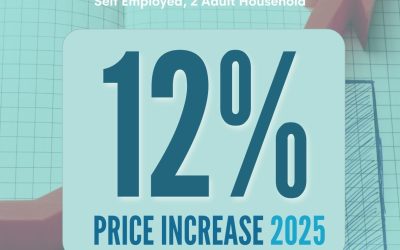
Self-Employed Health Insurance: 12% premium increase for 2025
Our 2025 health insurance premium increased by 12%. Healthcare is now our second-largest expense as a self-employed couple. And unlike groceries or travel, this isn’t an area where we can optimize much further. High deductible. No subsidies. Shopping the marketplace every year. As we plan for early retirement, we’re treating healthcare differently than other spending categories.
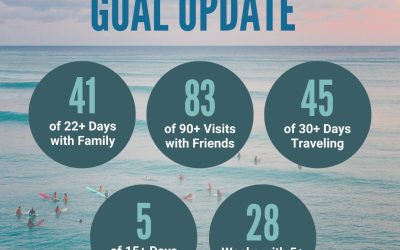
2025 Great Life Goals: Year End Review
In 2025, my Great Life Goals told a story I didn’t fully expect. More time with aging parents. Fewer ocean days than I craved. Travel shaped more by service than adventure. This year, I tracked days with family, visits with friends, travel, ocean time, and walking habits. But what I really measured was alignment. 2025 became a year of proximity to the people who matter most, releasing pressure in hard seasons, and noticing where my spending isn’t yet representing my values. Here’s what my goals revealed about the life I’m building.
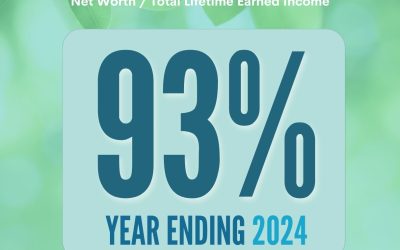
Tracking Our Lifetime Wealth Ratio: 2025 Update
For every $1.00 we’ve earned as income in our lifetime, we’ve built $0.93 of net worth, not by saving every dollar, but by investing regularly and letting time + compounding do the work to grow our wealth. Ever wondered how effectively you’re turning income into wealth? We’ve been tracking our progress for the last 5 years using the Lifetime Wealth Ratio.