

Think you know how much you've earned in your life?
The answer might surprise you!The content on Surprising Wealth reflects my own experiences and opinions. It is not intended as financial, legal, or tax advice. Please consult a professional for advice tailored to your situation.
Do you know the total amount of money that’s passed through your hands over the years?
Learn how to calculate your lifetime earnings and see your financial journey in a whole new way

What Is Lifetime Earnings?
It’s the total amount of income you’ve earned throughout your working life. This includes wages, salaries, tips, and any other forms of income that have been reported to the government for tax purposes. Tracking your lifetime earnings helps you see how much you’ve made over the years and can be useful when calculating metrics like your Lifetime Wealth Ratio (LWR) or planning for financial independence.
Medicare earnings are often preferred over Social Security earnings for this purpose because Social Security earnings are capped annually. This means if you earn above a certain threshold, only the income up to that cap is reported for Social Security purposes, potentially underestimating your total lifetime earnings. Medicare earnings, on the other hand, are not subject to this cap, giving you a more comprehensive view.

How To Access Your Lifetime Medicare Earnings:
One of the best ways to get this information is by logging into SSA.gov and accessing your lifetime Medicare earnings. Here’s how to do it and why this method is useful:
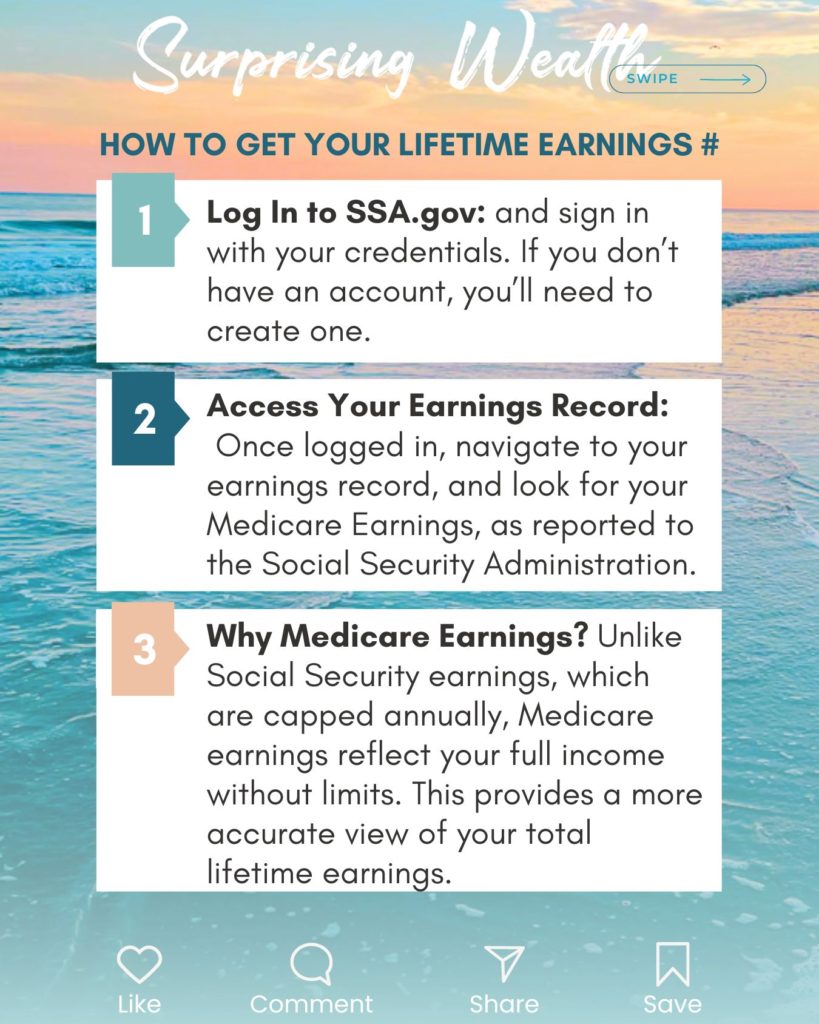
1) Log In to SSA.gov: Visit SSA.gov and sign in with your credentials. If you don’t have an account, you’ll need to create one.
2) Access Your Earnings Record: Once logged in, navigate to your earnings record, where you’ll find detailed information about your lifetime earnings as reported to the Social Security Administration.
3) Why Medicare Earnings?: Often preferred for this purpose because Social Security earnings are capped annually. This means if you earn above a certain threshold, only the income up to that cap is reported for Social Security purposes, potentially underestimating your total lifetime earnings. Medicare earnings, on the other hand, are not subject to this cap, giving you a more comprehensive view.
4) Limitations: Keep in mind that this record may not include all sources of income. It won’t capture unreported earnings or income from small businesses taken as owner profits.
While You’re There: Make Sure Your Records Are Accurate
While you’re at it, verify that your Social Security record aligns with your tax returns and pay stubs. This ensures your earnings history is accurate, which is crucial for future Socila Security benefits and financial planning.
How This Knowledge Helps You
Knowing your Lifetime Earnings can be a powerful motivator. It helps you understand the impact of your financial decisions over time and can offer insights into how effectively you’ve turned income into wealth. For instance, calculating your Lifetime Wealth Ratio (LWR) gives you a tangible measure of how well you’ve converted your earnings into net worth.
Understanding Your Lifetime Earnings: An Eye-Opening Experience
Discovering your Lifetime Earnings can be a profoundly revealing and empowering experience. This figure represents the total income you’ve accumulated throughout your working life, encompassing wages, salaries, tips, and any other income reported to the government. Seeing this number can stir a range of emotions and reflections about your financial journey.
For some, the realization that a significant amount of money has passed through their hands might bring a sense of regret or frustration. You might find yourself thinking, “I worked so hard, but where did it all go?” It’s normal to feel this way, especially if you’re faced with the reality that despite earning a decent income, your savings and investments don’t seem to reflect that effort. Recognize that this feeling is a common part of reflecting on past financial habits and it’s a powerful first step toward change.
Others might experience a sense of shame or embarrassment if they feel their financial situation hasn’t progressed as hoped. This can be especially tough if you’ve faced challenges or made decisions that didn’t lead to the outcomes you anticipated. It’s important to remember that everyone’s financial journey is unique, and feeling this way is not a reflection of your worth or potential. Instead, use this awareness as motivation to pivot and improve your financial strategies moving forward.
On the flip side, discovering that you’ve made noticeable strides over time can fill you with pride and accomplishment. Perhaps you’re pleasantly surprised to see that your earnings have steadily increased, or you’re excited to recognize the progress you’ve made despite starting from a modest position. Celebrate these milestones! They’re evidence of your perseverance and smart financial choices, and they underscore the effectiveness of your efforts.
For those who see their small, consistent efforts adding up, the feeling of gratification can be particularly rewarding. If you’ve been diligent about saving and investing, even in small amounts, seeing how these efforts compound over time can be incredibly satisfying. It’s a testament to the power of persistence and the positive impact of incremental progress.
Finally, if you’re fortunate enough to be a high-income earner, you might experience a mix of gratitude and humility. Recognizing how your financial position has allowed you to accumulate wealth can be affirming, but it’s also essential to remain grounded and mindful of the broader financial landscape. Use this awareness to inspire others and to make thoughtful decisions that align with your long-term financial goals.
No matter where you find yourself in this spectrum of emotions, understanding your Lifetime Earnings provides valuable insights into your financial journey. It’s an opportunity to reflect, celebrate, and recalibrate as needed. Embrace this moment as a chance to gain clarity and to continue building your path to financial independence and wealth.
My Own Emotions Around Lifetime Earnings Tracking
Personally, I was surprised by our modest earnings (especially my own very modest earnings as a part-time self employed earner) but felt a deep sense of accomplishment at how well we’ve turned that income into investments and net worth. I definitely felt some shame around my substantially lower earnings compared to my partner. But also a sense of accomplishment, as a major role I play in our household is researching, planning, and tracking our money flow and investments. Definitely gratitude for: the opportunites we were able to identify on our 20+ year investing and planning for our financial future, the bravery to take action even when we didn’t have many financial role-models among family and friends, our division of tasks into each partner’s areas of strength, and our good luck and fortune not to have too many adverse events happen in our life so far. It’s been a long journey, but it truly feels like Surprising Wealth.
Apply It to Your Journey
Seeing your Lifetime Earnings number can be a moment of reflection. It’s an opportunity to celebrate how far you’ve come and to refocus on your financial goals. For many, it can be inspiring to realize that even modest earnings can lead to surprising wealth when managed wisely. Use this information to set new targets, refine your financial strategies, and continue building your dream life.
Remember, the path to financial success is a marathon, not a sprint. Tracking your Lifetime Earnings isn’t just about the numbers—it’s about recognizing your progress and staying motivated on your journey to financial independence and wealth creation.
– – – –
A Bit About Us
Our journey began with humble beginnings. We’ve navigated through the challenges of creating a life and a living we love, while earing low to median incomes. What started as a modest dream of being able to retire someday has turned into a concrete plan. We’ve been on the SlowFI path, consistently saving and investing for 20+ years. Our income over time has stayed roughly in the 50th percentile, so we are truely everyday Americans. We’ve achieved remarkable results through living below our means and consistently investing the difference. Now in our mid-40s, we are in the top 20% for U.S. household wealth for our age group. This has been possible through conscious spending, consistent saving, strategic investing, and a commitment to lifestyle design where we spend generously on things that bring us value and contentment, while cuting back on things we are ambivalent about. It can be daunting when you hear the stories of tech workers or doctors or other people with large income shovels. We want to share how an everyday couple with median US income has built wealth for the future, while also creating a life we love today.
Why Financial Independence?
Financial Independence means having the freedom to make choices that aren’t dictated only by the need for a paycheck. It’s about gaining control over your time and energy, and being able to pursue what truly matters to you. For us, it’s about creating time for friend & family, travel, and the experiences that bring joy and fulfillment.
Join Us on the Journey
In January 2021, I ran some calculations, projected our investment growth, and analyzed our current spending levels. After adjusting our spending assumptions for future inflation, I realized we could replace our earned income (trading time for money) with investment income (our money making money for us) in approximately 10 years. With 90 months left to go, we’re solidly on that path and we want you to join us. Whether you’re just starting out or well on your way to financial independence, Surprising Wealth is here to support and inspire you. Together, we can make every month count and turn dreams into reality.
Thank you for being a part of our community. Let’s embark on this journey to financial independence together!
Disclaimer: All the tips and stories here are from my own journey toward financial independence. Remember, what worked for me might not work for everyone. This content is for informational purposes only and should not be considered as financial, legal, or tax advice. Always consult with a professional before making any significant financial decisions.
%
CoastFI for Retirement
%
To LeanFI
%
To FIRE Number
Months To FI
Recent Blog Posts
Discover the power of small actions and big dreams with Surprising Wealth. Through a blend of personal anecdotes, case studies, and actionable tips, we’ll show you how we’re navigating the complexities of money management, investment strategies, and lifestyle choices to achieve true financial freedom and fulfillment.

The Best Car I Never Bought
I thought I was saving for my next car. It turns out I was really saving for something much bigger. Here’s how an unexpected opportunity transformed a future car purchase into the down payment on a rental property… and one of the best lessons we’ve learned about opportunity cost.

The Anti-Upgrade Mentality That Upgraded Our Entire Life
Every major purchase asks the same question: What else could this money become? Years ago, we started asking that question before upgrading our home or car. The answers reshaped our finances… and our lifestyle.

65 Months to FI – Practicing Looking for the Opportunity
65 months to FI! Just months after deciding to slowly wind down our rental portfolio, life accelerated the plan for us. Three long-term tenants moved out in rapid succession, giving us the unexpected opportunity to sell three properties this year instead of one. Twenty years ago, we couldn’t have imagined how much rental real estate would shape our Financial Independence journey. Today, we’re learning to embrace the evolution of that chapter.

2025 Auto Cost: The Quiet Superpower of a Boring Car
Every year I calculate the true cost of owning my vehicle, including insurance, maintenance, taxes, and depreciation. The results remind me that one of the best ways to build wealth isn’t earning more… it’s spending intentionally on the things that matter most.

2026 Great Life Goals: Mid-Year Friendship Goal Check-In
One of the ideas behind SlowFI is that you don’t postpone living until you reach your financial number. This year’s visits with friends goal has been a wonderful reminder of that. Research consistently shows that strong relationships are one of the biggest predictors of health and happiness. So we simply keep saying yes to inviting friends over, attending bookclubs, and chatting with neighbors. Those tiny choices added up to 79 meaningful connections so far.

70 Months to FI – What Would You Want Less of in 6 Years?
70 months to FI! When you’re far from Financial Independence, you optimize for growth. When you’re closer, you begin optimizing for simplicity. This month’s decision to sell a long-held rental property marks a quiet but meaningful shift in how we’re preparing for the next chapter. As we approach FI, we’re realizing that what once energized us is now beginning to exhausts us. Sometimes the bravest financial decision is letting go of something that once made perfect sense.
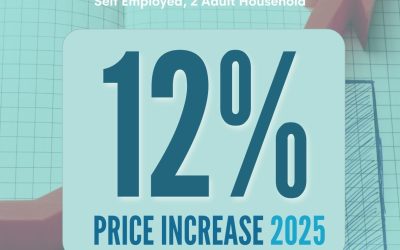
Self-Employed Health Insurance: 12% premium increase for 2025
Our 2025 health insurance premium increased by 12%. Healthcare is now our second-largest expense as a self-employed couple. And unlike groceries or travel, this isn’t an area where we can optimize much further. High deductible. No subsidies. Shopping the marketplace every year. As we plan for early retirement, we’re treating healthcare differently than other spending categories.
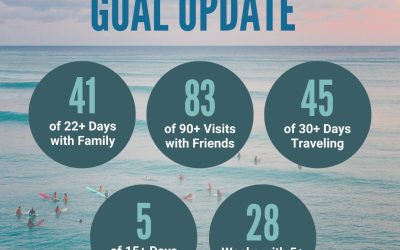
2025 Great Life Goals: Year End Review
In 2025, my Great Life Goals told a story I didn’t fully expect. More time with aging parents. Fewer ocean days than I craved. Travel shaped more by service than adventure. This year, I tracked days with family, visits with friends, travel, ocean time, and walking habits. But what I really measured was alignment. 2025 became a year of proximity to the people who matter most, releasing pressure in hard seasons, and noticing where my spending isn’t yet representing my values. Here’s what my goals revealed about the life I’m building.
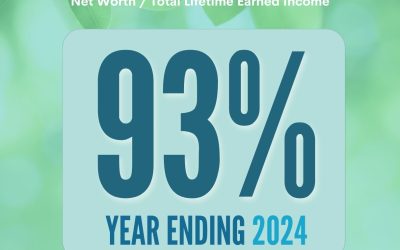
Tracking Our Lifetime Wealth Ratio: 2025 Update
For every $1.00 we’ve earned as income in our lifetime, we’ve built $0.93 of net worth, not by saving every dollar, but by investing regularly and letting time + compounding do the work to grow our wealth. Ever wondered how effectively you’re turning income into wealth? We’ve been tracking our progress for the last 5 years using the Lifetime Wealth Ratio.